
According to the movies, you know you’re in labor when your water breaks and it’s always a big to-do with a huge gush that comes at inopportune times.
According to the Cleveland Clinic, only 8% – 10% of pregnancies actually result in waters breaking prior to the onset of labor (called PROM, or “premature rupture of membranes”). I was part of this 10%.
My Plan
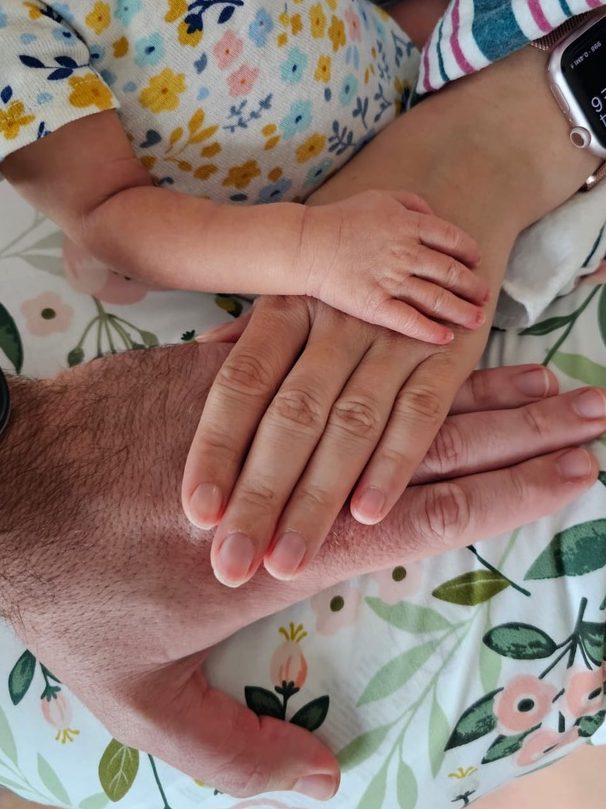
Let’s just cut to the chase – any plan you have is actually a preference because you never know what is going to happen and you may need to pivot. My plan was to take a week off from work before Baby Girl’s due date. This would give me time to prepare in case she came early, and also allow me to cleanly step away from work, unwind, and get into the right headspace before my life changed forever. In the two weeks leading up to that, I opted to work remotely, not only because moving around was becoming more challenging but also because, let’s be real, no one wants their water to break in the office like something out of a movie.
For birth, I wanted to feel it for what it is and have that experience. I envisioned laboring in the tub and laddering the interventions as necessary, starting at nitrous oxide. If I could handle it, I was going to deliver without an epidural.
The Reality
Fair warning: I’m going to keep it real here. I found hearing other people’s birth stories during my pregnancy to be really valuable and interesting. Again, knowledge is power and it’s that knowledge that gave me the strength to be ready to conquer my fear of childbirth. If you are interested in reading about my pregnancy experience, see this post.
Membrane Rupture
At 36 weeks and 3 days pregnant, I had my last in-person workday before transitioning to two weeks of remote work. Vaginal discharge is a pretty common occurrence in pregnancy, but around 11 a.m., I felt a particularly heavy discharge that made me pause. I quickly headed to the bathroom, but everything seemed normal, so I brushed it off and carried on with my day without any further issues.
After work, I went to Happy Hour with colleagues, sticking to water and indulging in a big bowl of chips with spinach artichoke dip. However, around 7:30 p.m., I started feeling that same discharge sensation, only this time it was happening more frequently. I knew something wasn’t quite right, so I decided to head home and called my husband on the way to fill him in.
Once home, I went to the bathroom again. Though the discharge was still heavy, it wasn’t the dramatic gush I had imagined when thinking about water breaking. I reminded myself that the amount of fluid released can depend on where the rupture happens in the sac—if it’s at the bottom, there’s usually a big gush, but if it’s higher up, it can be more of a trickle.
I put on a pad, laid a towel on the couch (just in case), and settled in to watch some TV. After dozing off, I woke up around 11:15 p.m., and the moment I stood up to walk to the bathroom, I felt it—a huge gush, exactly like you picture when you think of your water breaking. I sat on the toilet, and the fluid just kept coming. There was no denying what was happening at this point.
I called the on-call midwife, who, given that I was only 36 weeks along and hadn’t had my Group B Strep (GBS) test yet, advised me to go to the hospital. They would test to confirm that my waters had broken, and if they had, I’d be admitted. Thankfully, I had packed my hospital bag and we had installed the car seat a few days earlier. My husband hadn’t packed his bag yet and we weren’t done with the wallpaper in the nursery, among other little things. They would all have to wait (except his haphazardly packed bag). I quickly took a shower, added a few last-minute items to my suitcase, and grabbed a towel for the car ride. At this point, I was soaking through my pads into my shorts, but aside from the constant leaking, I wasn’t in any pain.
My husband and I took a few deep breaths before heading out. We definitely weren’t expecting this, thinking we had a few more weeks. It’s such a surreal feeling, knowing you’re about to leave your home for the last time as just the two of us.
We arrived at the hospital around midnight and spent about 3 hours in triage. They confirmed my waters had broken, and I was diagnosed with PPROM (preterm premature rupture of membranes). Since I was under 37 weeks, the extra “P” meant my baby was considered preterm. A cervical check showed I wasn’t dilated at all, but with PPROM or PROM, the baby needs to be delivered within 24 to 48 hours to reduce the risk of infection—unless you’re under 34 weeks, in which case they try to delay labor, according to the Cleveland Clinic.
The midwife advised I was probably going to be in it for the long haul since my labor hadn’t actually started yet and I was a first time mom.
Hospital Admission
Once I was admitted to the hospital, they immediately started me on an IV and administered antibiotics as a precaution for Group B Strep. Since I hadn’t been tested yet at my OBGYN appointment and the hospital’s test results wouldn’t be ready in time, they had to treat me as if I were GBS positive. Along with the antibiotics, they gave me Cytotec to help “ripen” my cervix and they gave me a steroid shot to help Baby Girl’s lungs develop.
By the time the nurses were finished with everything, it was 4:30 a.m., and we were finally able to rest. Unfortunately, my mind was racing. As a very Type-A person, I like to have everything organized and under control. As aforementioned, my original plan was to take a week off work before my due date to wrap things up neatly and decompress. But with PPROM, those plans were out the window. I spent some time emailing my bosses and setting my out-of-office message on my work email. I also canceled a few weekend appointments, including a hair appointment I’d made to ensure I looked “fresh” for delivery—clearly, that wasn’t going to happen now!
I knew I had to get these little administrative tasks off my plate so I could shift my focus to labor, delivery, and the reality of becoming a parent. But it was hard. I hadn’t had any time to truly decompress, and adjusting to that sudden change of pace was a challenge.
Labor & Interventions
The Cytotec started to work, and by 5:30 a.m., I began feeling contractions. For the first few hours, they were very manageable. I was even able to take a shower, and the staff let me eat breakfast, thankfully, since the chips and dip from the night before hadn’t exactly filled me up.
I’ve always considered myself to have a high pain tolerance, but this experience was truly humbling. Even the cervical checks were enough to make me consider waving the white flag and asking for a c-section. By around 10 a.m., my contractions were incredibly intense, but I was still only 1 cm dilated. I had envisioned myself laboring in the tub and using nitrous oxide, but when it came down to it, I realized I would need more relief through drug interventions. I requested a dose of fentanyl, which helped—for about 45 minutes.
Once the fentanyl wore off, I was sitting on an exercise ball, writhing in pain and unable to speak while my husband massaged my back. That’s when I decided it was time for the epidural.
Despite always being very scared of childbirth, I had educated myself, listened to other people’s experiences, and even took an online Hypnobirthing class. I thought I might try to labor without an epidural, but it turns out I couldn’t. I have immense respect for the badass women who can! Even though I felt like I was giving up, the nurse reminded me that there’s no prize for going without an epidural—the real goal is a healthy baby.
In the end, getting the epidural was the best decision I made during the birth. It allowed me to fully relax, which in turn helped my dilation progress smoothly. I could still feel sensation in my legs and feet, but the epidural blocked the pain exactly where it needed to.
Delivery
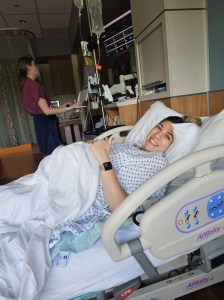
Around 9 cm dilated, I started feeling the overwhelming urge to push, but I couldn’t start until I reached 10 cm. This was incredibly uncomfortable—the urge was so strong, even with the epidural. The anesthesiologist gave me an additional 5 cc of medication, which helped ease the discomfort between contractions, but when the contractions hit, I could still very much feel the urge to push.
One common concern with getting an epidural is that it can slow down the delivery process since you might not feel the contractions as clearly, and pushing in sync with them is the most effective way to deliver the baby. Luckily, I could still feel my contractions at this stage. In fact, once I was allowed to push, I felt a huge sense of relief because I no longer had to hold it in.
The labor and delivery team was amazing throughout the process. Not only were they incredibly encouraging and enthusiastic, but they also worked with me to find the most effective breathing technique and guided me in “aiming” my pushing. I gave three big pushes with each contraction, and sometimes four toward the end. After about 40 minutes of active pushing, our sweet baby girl was born! I know I was fortunate to have such a relatively short pushing phase, especially after having had an epidural.
After Birth
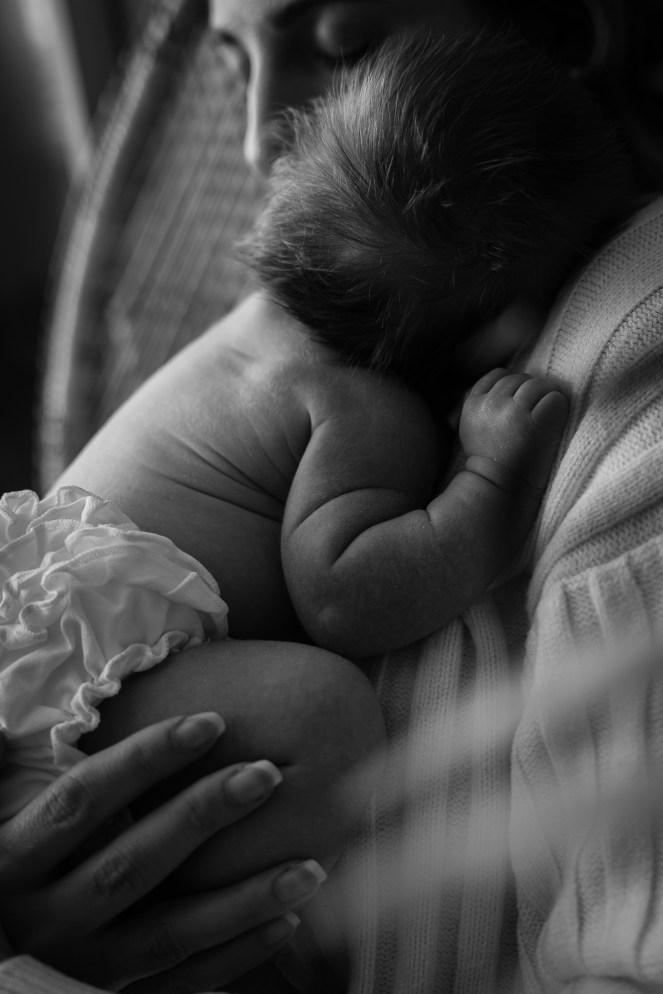
They wrapped up Baby Girl and placed her on my chest, but she wasn’t crying, and her skin had a bluish-purple tint, so they quickly took her away to check on her. They got her breathing and performed all the necessary medical assessments. Her blood sugar was low, and she was having some respiratory issues. My husband stayed by her side while I watched with concern, unable to move as I was being stitched up from a second-degree tear. He reassured me that she was okay. It was a special moment when we learned that she weighed exactly what I had at birth.
Once she was stable, they brought her back to me for our “golden hour” of skin-to-skin contact. During the couple of hours she spent with us, Baby Girl grunted continuously, and her blood sugar still wasn’t where it needed to be. In the end, they had to admit her to the NICU. While no parent ever wants their baby to go to the NICU, we knew she was in excellent hands. By this point, it was around 10:00 p.m., and we hadn’t slept in over 36 hours. I was feeling completely overwhelmed by everything.
What surprised me most was the amount of physical pain I experienced after delivery. I know it probably doesn’t compare to having major abdominal surgery, but I felt like I had been hit by a truck. I needed help with the most basic tasks—sitting, walking, even going to the bathroom. Just when I thought I’d regain some independence after the limitations of the third trimester, I found myself feeling worse off than before. As much as you want to be with your baby, it’s really scary to think of having to take care of a brand new human when you can’t even take care of yourself.
Baby Girl was in the NICU for 5 nights and we spent as much time with her there as we could. All the babies at our hospital have their own personal NICU rooms, so it was really private. We got to work on nursing once she had her feeding tube removed, I was able to pump and learn from the lactation consultants, and the nurses taught us how to change her diapers and give her a bath. It was hard to see her in the room and leave without her everyday, but we trusted the process and know she is doing great now because of it.
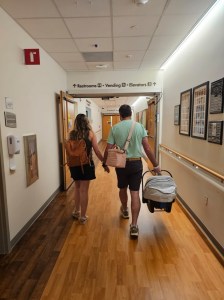
Overall, my birth experience was really positive. For something I’ve been so, so scared of my whole life, I’m extremely proud of myself. You never know what is going to happen. My pregnancy was super smooth, despite common discomforts and symptoms, so to have PPROM and deliver so early was a huge shock. Next time, I’ll have everything done for the baby no later than 35 weeks and I won’t wait as long to get the epidural. 😉
What About You?
What would you like to share with others about your birth story? If you haven’t delivered yet, is there anything you are questioning? You got this, mama!!!
Discover more from Around with Ash
Subscribe to get the latest posts sent to your email.

 Around with Ash
One thought on “My Birth Story: PPROM”